Wyoming · Energy + Agriculture + Grid
Range Sustain Tech

WellSite DistributedEnergy Resource Node

Transforming rural ranch water wells into grid-integrated energy assets — heating stock tanks, managing coincident peak demand, growing winter fodder, sequestering soil carbon, and returning value to ranchers as Wyoming-native cooperative credits.
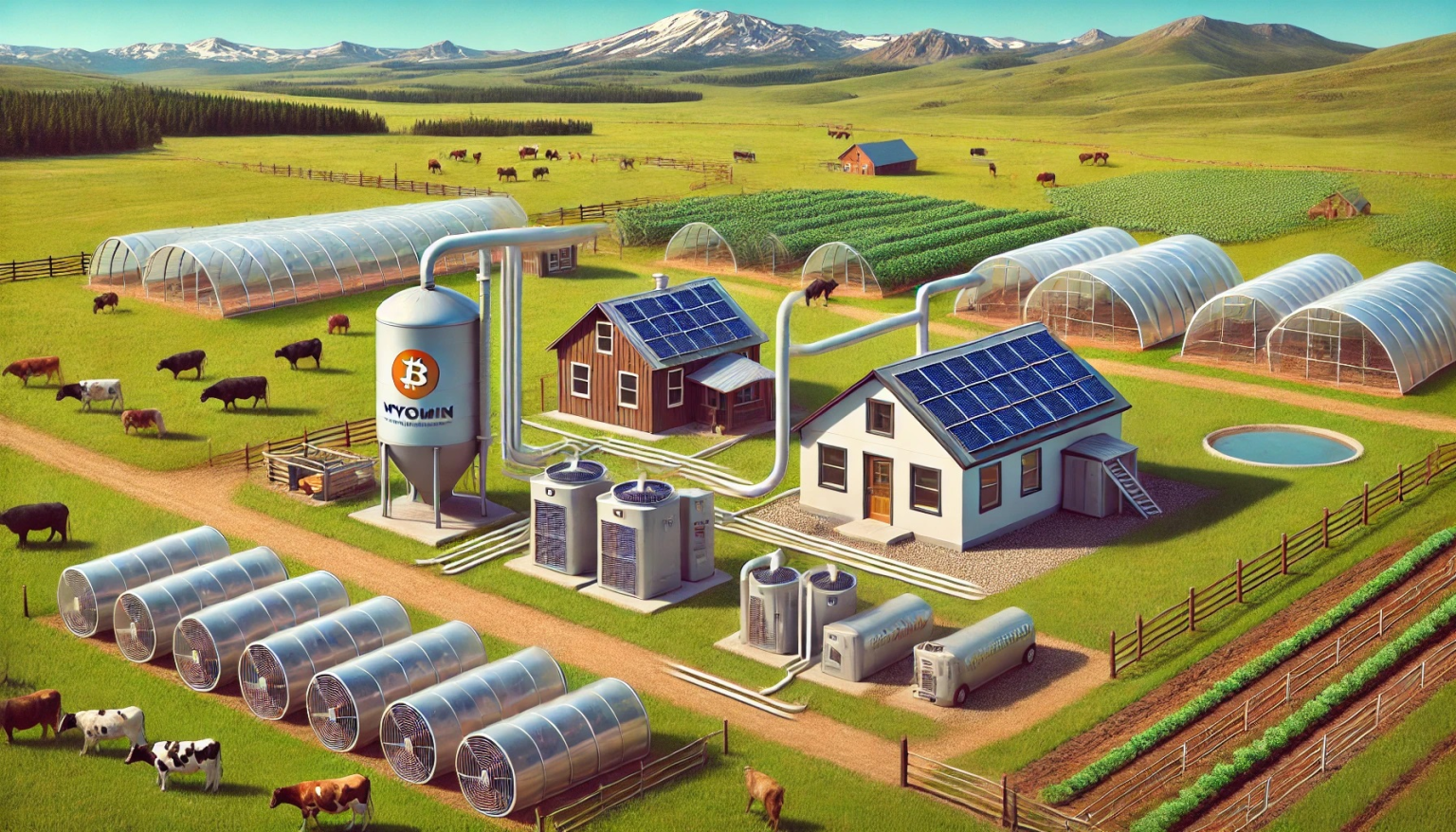
Wyoming ranch landscape
$3.91
per heater / day in freezing conditions — unrecovered cost
11K+
Wyoming farms & ranches — the addressable market
40hr
grid-outage animal protection via battery backup
more BTU output than a standard resistance heater
Rural well sites extract value.
They don't create it.

Wyoming ranchers spend $1,200–$3,500+ every winter on stock tank heating — with zero economic return. These well sites are already metered, electrified, and geographically distributed. They're the ideal behind-the-meter DER candidates that currently contribute nothing to grid efficiency.

$3,500
Winter heating cost per operation
A ranch with 4–8 stock tanks spends $1,200–$3,500+ per winter on electric resistance heaters that fail in extreme cold and contribute nothing to ranch economics.
CP
Coincident peak — invisible to ranchers
Rural cooperatives bear G&T (Generation & Transmission) demand charges based on just 4–5 peak hours per year. When resistance heaters run during those events, costs flow back to all members through rates over time.
0%
Soil carbon return from conventional grazing
Without data-driven grazing management, cattle degrade soil organic matter — reducing moisture retention and increasing drought and wildfire risk across millions of Wyoming acres.

Three phases.
One node.

Each well site node begins as an energy asset and evolves into a complete land management intelligence platform — powered by the same hardware, anchored at the same location where cattle come every day.

Phase 1 — Energy Node
Phase 2 — Ranch Intelligence
Phase 3 — Cooperative Platform

// wellsite-der-node · deployed now

WellSite DER Node

Solar PV (Photovoltaic), LFP (Lithium Iron Phosphate) battery storage, and a flexible data center load installed at the ranch water well. The data center — an immersion-cooled Bitcoin miner operating at 4,700W — converts electricity to heat at near 100% thermodynamic efficiency, delivering 16,040 BTU/hour through a closed hydronic loop into the stock tank. More than 3× a standard resistance heater, with instant curtailment capability and mining revenue as a byproduct.

  • 3–6 kW ground-mount solar with LFP battery (10–20 kWh)
  • Immersion-cooled flexible data center load generating mining revenue
  • Dual closed-loop hydronic thermal delivery to stock tank
  • CP (Coincident Peak) curtailment to zero within seconds via Luxor Commander/LuxOS
  • 40+ hour grid-outage animal protection via battery-backed pump cycling
  • Power Theory PowerTwin real-time monitoring dashboard
// phase 1 economics
Energy cost reduction60–85%
Winter savings (4–8 tanks)$1,200–$3,500+
Feed cost reduction (100 cows)$3,000–$4,500
CP reduction per 4-node ranch18–20 kW
CP reduction at 100 sites470 kW dispatchable
Outage coverage40+ hours
// prototype status — range sustain grange
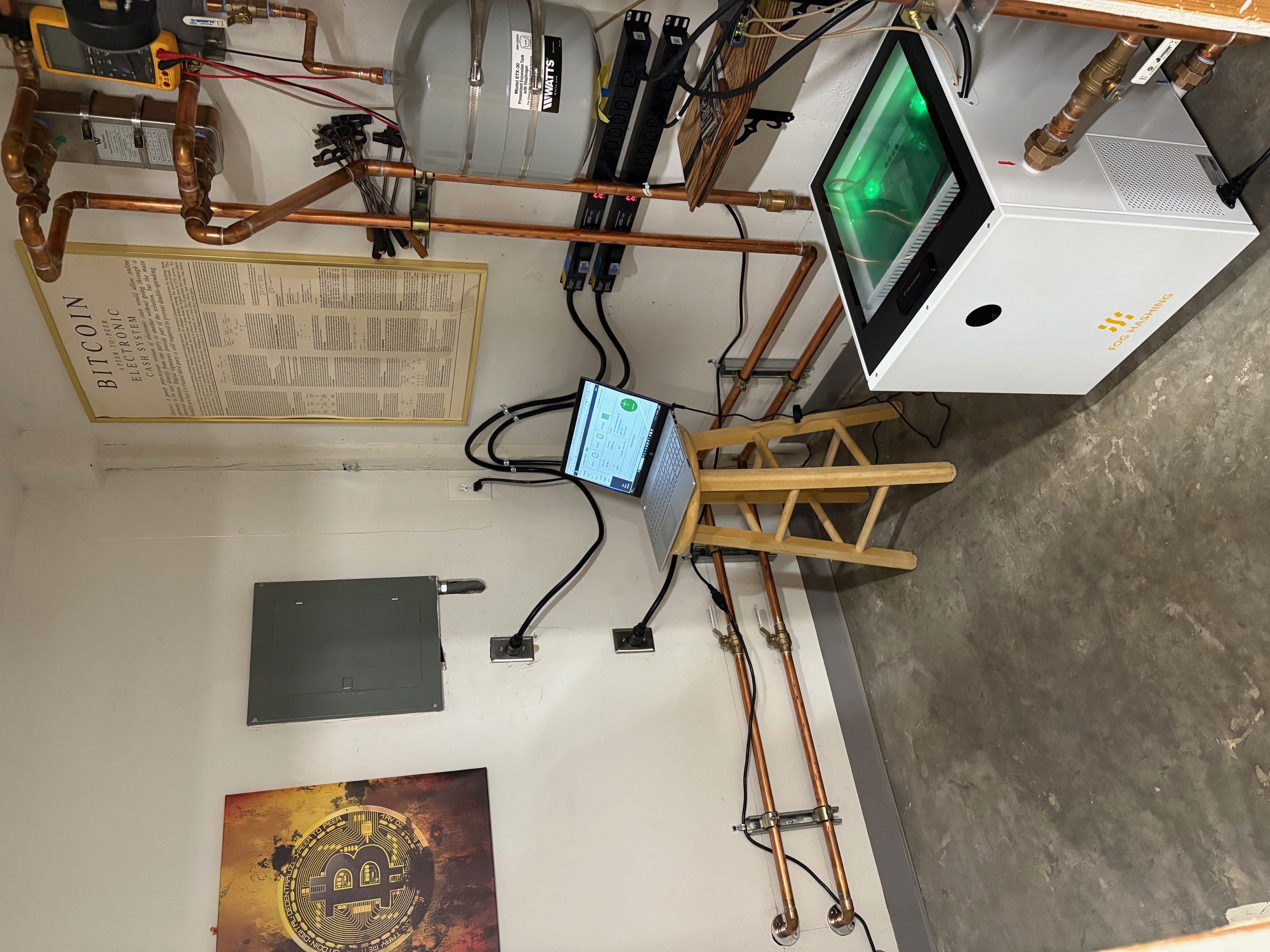
RSG shop heating system — immersion-cooled miner heating radiant concrete slab via copper glycol loop
The shop above is heated by the same architecture as the WellSite DER Node — immersion-cooled miner → copper hydronic loop → hot glycol → radiant concrete slab. The floor is the radiator. Operational at Range Sustain Grange, Campbell County, WY.

// regenerative-ranch-intelligence · phase 2

Ranch Intelligence Layer

The same node that manages energy in Phase 1 becomes the hub for a closed-loop land management platform. HydroGreen vertical pasture units — heated by the data center's waste heat at no additional energy cost — grow sprouted barley year-round. Agricultural drones deliver fresh fodder to wherever cattle are currently foraging, guided by virtual fencing collar GPS data and edge AI grazing decisions.

  • HydroGreen vertical pasture system heated by flexible data center waste heat
  • Drone delivery of sprouted barley to active foraging zones
  • GPS virtual fencing collars for precision grazing management (partner search underway)
  • Passive stock tank scale — continuous weight monitoring at every drink
  • Drone multispectral soil carbon and vegetation sensing
  • Edge AI synthesizing all inputs into real-time grazing decisions
  • Herd biometrics — health, rumination, stress — via collar data
// the carbon finance loop
Vertical pasture unit heat sourceData center waste heat
Additional energy cost for heating$0
Buildout funded byCarbon credits (pre-finance)
Ongoing operating costMining revenue (sustaining)
Soil moisture gain per 1% SOM~20,000 gal/acre
Well site catchment radius5–6 stock tanks
// soil carbon pathway
Verified soil carbon sequestration — measured by drone, processed by edge AI — generates carbon credits that pre-finance the vertical pasture and drone infrastructure. Mining revenue then sustains operations. A self-funding regenerative agriculture loop.

// cooperative-digital-twin · phase 3

Cooperative Digital Twin

At fleet scale, each node becomes a data point in a cooperative-owned intelligence platform. Ranch management becomes a game: ranchers see their soil health maps, herd trajectories, energy performance, and capital credit balances in a unified real-time dashboard. The fleet aggregates into a meaningful grid resource at the G&T (Generation & Transmission) cooperative level — comparable to utility-side battery investments, but distributed, member-owned, and agricultural.

Phase 3 also expands the flexible data center heating architecture beyond the ranch well site — bringing the same system that heats stock tanks and shop floors to a broader range of rural structures.

  • Power Theory PowerTwin digital twin — full ranch visualization
  • Capital credits denominated in Wyoming Stable Token (FRNT)
  • Fleet-aggregated Virtual Power Plant (VPP (Virtual Power Plant)) at G&T cooperative level
  • Carbon credit marketplace with verifiable on-chain data
  • Member-owned cooperative structure — ranchers own the network
  • Computer-based heating systems for homes, shops, barns, greenhouses, and other rural structures — the same immersion-cooled flexible data center architecture, deployed wherever heat is needed and grid revenue can be earned
// fleet scale value
Dispatchable CP load at 100 sites470 kW
Addressable sites (WY/SD/ND)7,000–11,000
Addressable CapEx$126M–$264M
Capital credits denominationWyoming FRNT token
Member roleOwner, not customer
Data value beyond energySoil, herd, land health
// beyond the ranch — phase 3 heating expansion
The same flexible data center heating architecture that warms stock tanks and shop floors gets deployed across rural Wyoming wherever heat is needed and grid revenue can be earned:
🏠 Homes
Radiant floor heat powered by mining revenue
🔧 Shops
Heated work spaces with zero net heating cost
🐄 Barns
Animal welfare heating with demand response
🌿 Greenhouses
Year-round growing season in Wyoming winters
Every structure that needs heat is a candidate. Every deployment earns mining revenue and provides grid balancing value to the cooperative.
Wyoming Stable Token

FRNT: Value stays in Wyoming.

Bitcoin mining runs in the background. FRNT is how that value flows back to cooperative members — as capital credits denominated in Wyoming's native digital asset, redeemable at Wyoming businesses as the ecosystem matures.

Range Sustain Tech is designating FRNT as the member-facing layer of the cooperative's financial architecture. Capital credits won't be redeemed immediately — cooperative reserves take time to establish — but when they are, they'll be in a form with real utility in the Wyoming economy: feed stores, farm supply co-ops, equipment dealers, local banks.

// how the value flows
01
Mining revenue generated
The flexible data center load mines Bitcoin in the background while heating the stock tank. Revenue flows into the cooperative treasury.
02
Capital credits allocated in FRNT
Each member's share of cooperative earnings is denominated in Wyoming Stable Token — visible in their ranch dashboard in real time.
03
Carbon credits compound the balance
Verified soil carbon sequestration data generates additional credit revenue, also settled in FRNT. Land health and token balance grow together.
04
Redeemable at Wyoming businesses
As FRNT adoption grows across Wyoming — feed stores, banks, local co-ops — cooperative capital credits become spendable in the communities that host the nodes.

Built with Wyoming.

Every partner in this coalition was chosen for a specific technical or institutional role. No filler. No logos for optics.

Confirmed
Joy Engineering
Distribution engineering, CP (Coincident Peak) avoidance design validation, grid interconnection — Jared Sostrom, P.E.
Confirmed
Power Theory (PowerTwin)
Virtual site digital twin, CP event simulation, operator-facing monitoring and ranch dashboard
Confirmed
Luxor Technology
LuxOS firmware and Commander platform — hardware-level curtailment and grid-response API
Confirmed
Bitcoin Mining Institute (BMI)
Flexible data center operations, Luxor integration expertise, workforce training curriculum development
Confirmed
Manufacturing Works (WY MEP)
Wyoming MEP/NIST partner — supply chain optimization, fabrication network, workforce development
Confirmed
Technetium Research LLC
Grid stabilization research, stock tank sensor integration, agricultural IoT architecture — Damon Printz
Confirmed
Tank Toad (Albin, WY)
Decade-proven remote stock tank monitoring — sensor integration consulting and remote architecture
Confirmed
HydroGreen Global Technologies
Vertical pasture sprouted barley systems — Phase 2 data center-heated indoor forage production
Engagement Underway
University of Wyoming
Research partner — rangeland carbon, animal science, STTR (Small Business Technology Transfer) eligibility, Extension rancher network
Target Partner
Wyoming Stable Token / FRNT
Member-facing capital credit denomination — Wyoming-native digital asset for cooperative financial layer
Target Partner
USDA Rural Development
Casper office — cooperative formation technical assistance and rural business development support

Energy generated
in Wyoming stays
in Wyoming.

The WellSite DER Node fleet is the cooperative's mission. Larger-scale flexible data centers operating on stranded and curtailed energy are the capital engine that funds it — in close collaboration with the rural electric cooperatives that already serve these communities.

// the founding principle
"Energy generated in Wyoming should create value in Wyoming. Data generated by Wyoming ranchers should be owned by Wyoming ranchers. Jobs created by Wyoming infrastructure should go to Wyoming workers. The cooperative structure is the mechanism that makes all of this enforceable."
🔥
Wellhead Flare Gas
Wyoming's Powder River Basin generates significant associated gas at wellheads that is flared or vented when pipeline capacity is constrained. Cooperative-owned flexible data centers co-located at wellhead sites convert that waste into Bitcoin mining revenue — with all proceeds flowing back to the cooperative treasury.
On-site gas-to-power generation
Zero pipeline infrastructure required
Environmental benefit: flaring eliminated
Revenue: cooperative treasury, not outside corp
Pipeline Gas (Constrained)
Where pipeline capacity exists but is periodically constrained, interruptible gas arrangements power the data center when available and curtail automatically when gas is needed for transport. This flexibility has direct value to pipeline operators — structured as formal offtake arrangements that compensate the cooperative for load flexibility.
Interruptible offtake agreements
Curtail automatically on pipeline demand
Value to producers and pipeline operators
Cooperative earns flexibility premium
🌬️
Curtailed Renewables
Wyoming wind and solar generation is frequently curtailed during low-demand periods — generation that is paid for but wasted. Large-scale flexible data centers absorb this curtailed energy, running at full capacity during off-peak hours when baseload generation has nowhere to go. The grid gets utilized. The cooperative gets revenue.
Absorbs wind/solar curtailment
Uses existing transmission capacity
Off-peak baseload utilization
No new infrastructure required
🤝
Cooperative Grid Partnership
Range Sustain Tech structures large data center deployments as jointly-owned assets with serving rural electric cooperatives wherever possible. A cooperative-owned flexible data center that actively manages load in response to G&T signals is a direct benefit to every member of the serving cooperative — reducing coincident peak costs that flow to all members through rates.
Joint ownership with electric cooperatives
G&T demand charge reduction for all members
Seconds-level curtailment via Luxor/LuxOS
Aligned incentives, not vendor relationship
// the complete circuit
Large-scale stranded energy data centers generate the capital  →  WellSite DER Nodes deliver the cooperative's mission  →  Local trades build both  →  The cooperative employs the operators  →  Members own the data  →  Revenue stays in Wyoming  →  Repeat at scale.

Wyoming
workers.
Wyoming
wages.

These are not temporary construction jobs or seasonal work. They are long-term cooperative employment positions — owned by the same communities they serve, not subject to layoffs driven by distant corporate earnings targets.

// trades + operations jobs created
Electricians
Construction + Ops
🔧
Plumbers / HVAC
Hydronic Systems
☀️
Solar Installers
Ground-Mount Arrays
🏗️
Construction Trades
Enclosures + Fab
🖥️
Data Center Techs
Long-Term Coop Jobs
🛸
Precision Ag Techs
Drones + Sensors
Training pipeline: Bitcoin Mining Institute + Wyoming community colleges → certified local technicians in immersion cooling, hydronic systems, and flexible data center operations.

Your ranch.
Your data.
Your call.

The WellSite DER Node fleet — at scale across thousands of ranch sites — will generate an extraordinary body of data: real-time soil carbon across millions of acres, continuous livestock health and weight data, high-resolution rangeland condition mapping, and energy performance data from every node.

This data has substantial commercial value to ag-tech companies, carbon markets, insurers, and federal agencies. Under conventional technology company models, it belongs to the platform operator. Under the Range Sustain Tech cooperative model, it belongs to the member whose land generated it.

Data sovereignty is a founding design principle — not an afterthought. The cooperative's data governance policies are set by the member-elected board. No outside entity accesses member data without explicit member authorization. Where members choose to monetize their data, proceeds flow back through cooperative capital credits.

// conventional tech vs. cooperative model
Outside Corp
Data owned by platform operator
Monetized without member consent
Profits leave Wyoming
Jobs are temporary or remote
Members are customers
Board answers to investors
RST Cooperative
Data owned by the member
Monetized only with authorization
Revenue stays in Wyoming
Jobs are local, long-term
Members are owners
Board answers to members

Three phases.
One trajectory.

1
// now · phase 1
WellSite DER Node
Validate thermal delivery, CP curtailment logic, and well pump backup protocol. Prototype hardware operational at RSG. 12-month ranch pilot underway. Engage cooperative on CP (Coincident Peak) signal integration and demand response enrollment.
DOE Beyond the Meter Prize
DOE (Department of Energy) SBIR (Small Business Innovation Research) Phase I
Wyoming SBIR Match Grant
2
// year 2–3 · phase 2
Ranch Intelligence + Capital Engine
Vertical pasture + drone delivery + virtual fencing + soil carbon sensing + edge AI. First stranded energy data center deployments with Powder River Basin producers and rural electric cooperative partners. Local trades workforce pipeline established.
USDA (US Dept. of Agriculture) SBIR (Small Business Innovation Research) · Carbon pre-finance
DOE ARPA-E · UW STTR
Stranded gas offtake revenue
Cooperative grid partnership
3
// year 4+ · phase 3
Cooperative Digital Twin + VPP
Fleet aggregation into cooperative-owned VPP. FRNT-denominated capital credits redeemable at Wyoming businesses. Ranch-as-a-game digital twin. Member-owned data platform. SD and ND expansion. Megawatt-class grid balancing fleet.
Cooperative member equity
Carbon marketplace · FRNT
DOE VPP programs
Grid balancing contracts
TP
Tyler Pirtz
Founder · Range Sustain Tech · Wyoming

"Energy generated in Wyoming should create value in Wyoming. Data generated by Wyoming ranchers should be owned by Wyoming ranchers. Jobs created by Wyoming infrastructure should go to Wyoming workers. The cooperative is the mechanism that makes all of this enforceable."

13+ years in power generation systems. Direct operational experience with high-density flexible data center hardware and heat recovery. Hands-on development of immersion-cooled systems with brazed-plate heat exchangers and hydronic loops for agricultural thermal delivery. Wyoming ranching context, firsthand.

Range Sustain Tech intends to develop this as a member-owned cooperative — giving ranchers, trades workers, and rural communities direct ownership stake in the infrastructure they build and operate. The energy system earns a place. The intelligence layer makes it indispensable. The cooperative structure makes it irreplaceable.

Range Sustain
Grange

Every technology in the RST cooperative is developed and proven at Range Sustain Grange first — a working Wyoming farm in Campbell County where Bitcoin miners heat stock tanks, copper hydronic loops warm radiant concrete slabs, and the full Phase 1–2 system runs in real agricultural conditions.

Also home to the registered Bitcoin cattle brand — the ₿ symbol legally registered in the Wyoming brand registry and burned into the hide of cattle on a working ranch.

See the Farm → ₿ Brand Art
// operational · Campbell County, WY
Immersion-cooled miner → copper hydronic loop → radiant concrete slab

Ready to bring this
to your cooperative
or ranch?